- By admin
- In Sergey's opinion
Project to strengthen the Odessa coast
Sergey Vladislavovich Dyablo’s great-grandfather on his mother’s side was Nikolai Aleksandrovich Khrennikov. He was an engineer of strengthening structures on the slopes of Odessa.
The main task of the engineering works on the strengthening of the Odessa coast that started in 1946 just after the War, was to prevent landslide destruction of the sea coast. Nicholai Khrennikov led the work throughout all his life. In addition, he taught at the Odessa Construction Institute.
Sergey was able to watch his great-grandfather working and could receive his first knowledge in early childhood. He recalls that in 1972-1973 Nikolai displayed at home rough drawings of the coast, that were few tens of meters long.
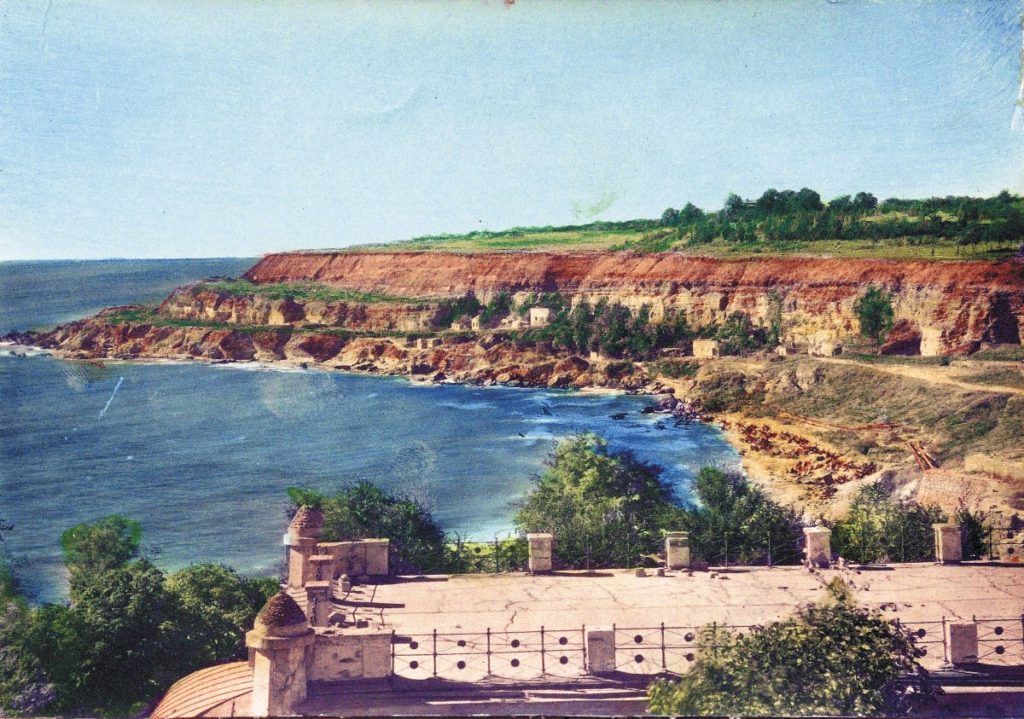
It was around this period shore protection works were performed from “Otrada” beach up to the “Golden coast-Zolotoi bereg”. And this part of Odessa was the place of first and foremost attention: piers, breakwaters, embankments, an underground system of tunnels and channels, drainage sewer was constructed. So, strengthening maritime slopes they managed to significantly halt the landslide process and actually save the city.
In 2007 Sergey Dyablo and his family published a book on the history of the famous family of Odessa publisher of the end of IX – beginning of XX century – devoted to Fesenko, the founder of a large family, the lives of his ancestors, the fate of his children and their descendants.
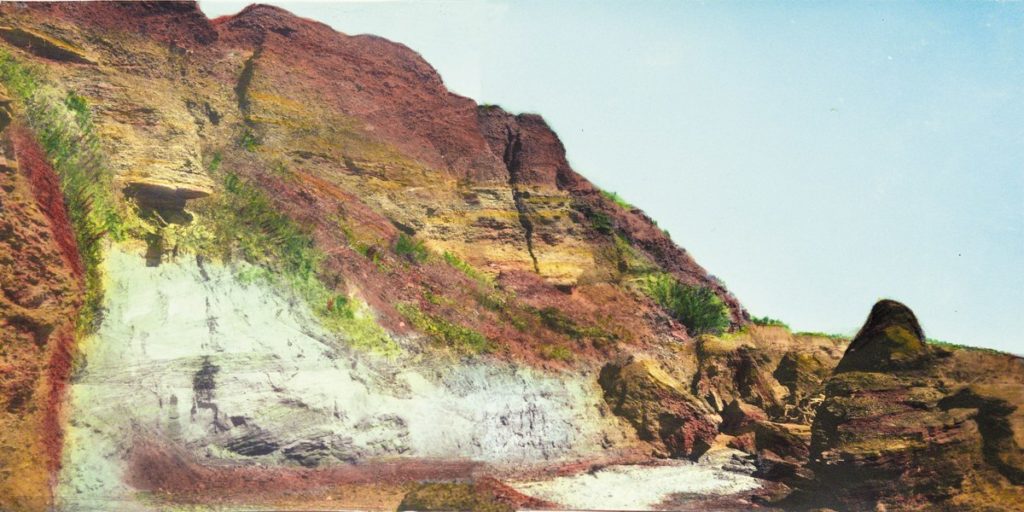
This book also includes memoirs of the life and work of Nikolai Alexandrovich Khrennikov, illustrated with rare photographs of the Odessa coast. Interestingly, pictures taken in the era of black and white pictures – colored due to the fact that Nikolai Aleksandrovich added color to the landscape of the Odessa coast manually, using paint.
Geological material under the Odessa reminds “Napoleon” cake
“Geological material under the Odessa reminds “Napoleon” cake with generous layers of cream. Therefore, the greater the pressure on him from the top, the more it ravels out. If this water would be drained out through vertical wells, the sliding process slows down. Therefore, in order to stop the sliding of the buildings towards the sea, it is necessary to bear not against the top layer, but against the bottom one using stilts. That is why the construction of high-rises, and some other projects is performed on the basis of pile footing now. Modern houses “don’t sink”, but the old buildings still gradually “settle down”. Pay attention: stepping into the old doorway, you can often see that the level of the doorway floor is lower than the pavement level: this house “drowned in this “Napoleon” layer for a period of more than 100 years of his history”, – says Sergey Dyablo.
Sergey Vladislavovich remembers that he learned about the history of the city, the characteristics of the ground coat and soil, and much more that was useful to him in his work and life exactly from his great-grandfather.
“I wish the engineering profession would remain in high esteem even nowadays. It is an elite profession all over the world, because it is the source of the welfare of any state”, – says Sergey Dyablo – a fourth-generation engineer.